 Back
Back
Productive Failure: The Key to Unlocking Deep Learning
 Nilanjana Saxena (Ms)
 1 day
1 day
*The fee is inclusive of prevailing GST and subject to changes.

Course Dates
For groups of at least 15 people, customised run dates are available, contact us for more details.
No Schedules Available.
What Is This Session About?
The evolving demands of the workplace, coupled with the need for personal capacity building, require a shift in learning approaches. Today, educators must not only impart knowledge but also inspire, guide, and engage learners to enhance both their workplace performance and personal growth. This programme offers a unique blend of dynamic discussions and practical exercises designed to deepen your understanding and application of Productive Failure (PF) in adult learning contexts. PF1 embodies constructivist principles, where failure is deliberately designed into the learning, to imbue learners with resiliency and learning agility, much needed skills during this “reskilling emergency” (World Economic Forum, 2020) 2 that was raised at the World Economic Forum (WEF) Annual Meeting in January 2020. This programme is a product of the year-long collaboration between the Institute for Adult Learning, the creator of Productive Failure, Prof. Manu Kapur ETH, Zurich, and our Adult Educators catalyst co-developers.
1 As detailed by Kapur & Bielaczyc (2012), PF has a two-phase design: a generation and exploration phase (Phase 1) followed by a consolidation phase (Phase 2). Phase 1 provides opportunities for learners to generate and explore the affordances and constraints of multiple representations and solution methods. Phase 2 provides opportunities for organizing and assembling relevant learner-generated solutions into canonical solutions. The design is guided by the following core principles: (1) create problem-solving contexts that involve working on complex problems that challenge but do not frustrate, rely on prior resources, and admit multiple solutions; (2) provide opportunities for explanation and elaboration; and (3) provide opportunities to compare and contrast the affordances and constraints of failed or sub-optimal solutions and the assembly of canonical solutions. [Kapur, M., & Bielaczyc, K. (2012). Designing for Productive Failure. Journal of the Learning Sciences, 21(1), 45–83. https://doi.org/10.1080/10508406.2011.591717]
2 World Economic Forum. (2020). Why we need a global reskilling revolution. World Economic Forum Annual Meeting, 1–6. https://www.weforum.org/agenda/2020/01/reskilling-revolution-jobs-future-skills/
What Does The Session Cover?
By the end of this session, you will be able to:
- Identify why and how learning from failures and mistakes aid generation of new knowledge, skills; facilitates metacognition, and agility.
- Articulate the principles behind learning from failure, aka Productive Failure.
- Utlitise Generative AI tools to brainstorm ideas towards problem-based scenarios for respective lessons.
- Design and facilitate learning using the 'learning from failure', a.k.a. Productive Failure approach.
^ Assessment: Formative Assessment(s) (Assignments/Presentations/Practical Performances)
^ Completion: Upon 100% attendance and meeting Assessment requirement, learners will receive a Certificate of Participation from IAL (& other partners where applicable)
Who Is It Suitable For?
- ACLP or equivalent graduates
- Adult Educators, lecturers, programme heads, those in charge of teaching and learning units
- Any trainer keen to harness learning from failure for better learning solutions
Course Funding and Policies
About the Speaker
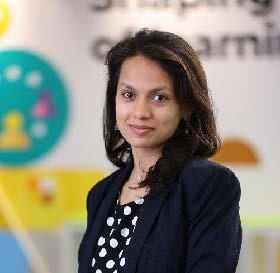
Nilanjana Saxena (Ms)
Learning Consultant | Institute for Adult Learning
Nilanjana brings over 10 years of experience in Learning and Development, with a deep passion for crafting transformative learning experiences that challenge conventional boundaries in education and technology. Starting as a chemistry teacher in Singapore and India, she shifted her focus to understanding "how people learn," earning a Master’s in Learning Sciences and Technology from the University of Sydney. She has worked with various start-ups in Australia, applying evidence-based approaches to rethink learning. Currently, as Senior Manager, Learning Innovation, at a national organization, she collaborates with stakeholders and international partners to leverage learning sciences and technology for meaningful human capital development. A thought leader and speaker at global conferences, she is also a published author.